
Kings County Wanted Notices Are Citywide
Brooklyn is Kings County, and it sits inside New York City, so wanted notices there run through one citywide outlet. That outlet is the NYPD Wanted page. There is no separate Kings County sheriff list of wanted people to check. The department posts selected notices there for wanted persons and missing persons. A typical entry might carry a physical description, a photo or video if the department released one, and a way to send in tips. Think of it as a public-safety tool, not a warrant roundup for every open case in the borough.
Some limits are worth knowing. NYPD does not publish a count of Kings County entries. No set posting schedule exists either. A notice goes up when the department wants the public's help, so plenty of warrants never show there at all. The images you see may be wanted-person photos, missing-person pictures, or surveillance footage rather than booking photographs. For a question about one person's warrant status, the NYC311 arrest-warrant instructions lay out the court-and-police route to ask directly.
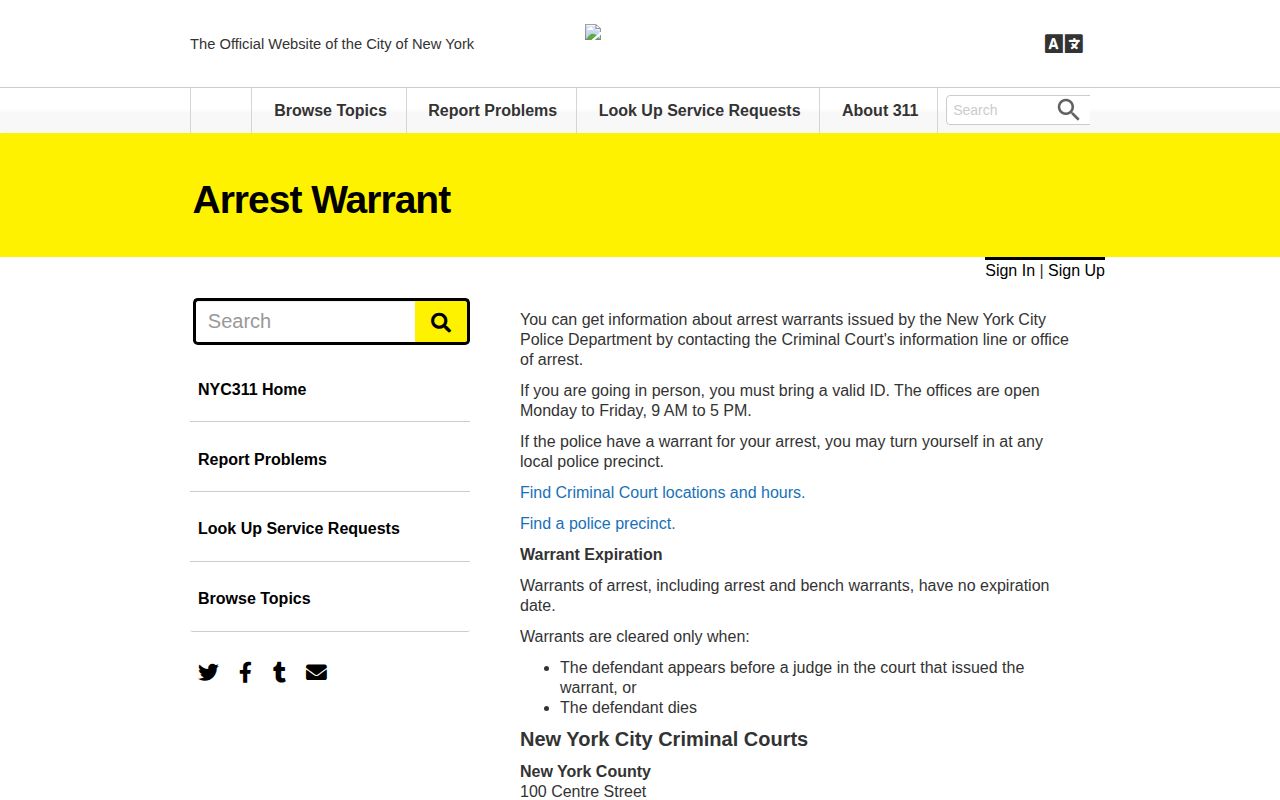
Those 311 instructions point you to the right office. They are not a database. A name typed into a list cannot settle someone's legal standing, so the court clerk or the arresting office is the place to ask about a specific warrant.
What Kings County Wanted Notices Can Show
Each notice carries only what NYPD chose to release for that case. The details differ from one entry to the next. They can change or come down at any time. The table below maps the kinds of details the official page may include, not a fixed set of fields every entry will have.
| Notice element | What it can indicate |
|---|---|
| Person or case identifier | The individual or matter NYPD is asking the public to help locate or identify. |
| Released image or video | A photograph, surveillance image, or video only when NYPD has published it for the notice. |
| Description | Details NYPD released to help distinguish the person or incident, not a complete case file. |
| Public-safety context | The stated reason for the notice, which remains an charge or investigative charge unless a court record establishes an outcome. |
| Tip channel | Official telephone, web, or app routes for information that can assist law enforcement. |
A notice can name a person, show a face, or list a charge. Charges shift over time. The court file is where a case truly ends, not an old screen grab or a notice left sitting online.
Note: An old repost, a social share, or a copied image is no way to judge whether a notice is current or who it really shows.
Use Kings County Wanted Information Safely
Start with official sources. The NYPD's wanted listings exist so trained officers can act on them, not so readers can play detective. Spot someone you recognize? Write down what you saw, note the location, and report it through an official channel. Do not approach the person or try to confirm anything yourself. Leave that work to the people trained for it.
- Open the current NYPD Wanted page and read the date, description, and notice context carefully.
- Compare only the information NYPD released. Do not infer that a photograph establishes guilt or current warrant status.
- For a safety-related observation, use NYPD Crime Stoppers or emergency services when there is an immediate emergency.
- Do not confront, follow, detain, or alert a person who may be the subject of a notice.
- For a separate custody or court-record question after an arrest, use the official paths summarized on the Kings County booking and record lookup page.
Check Kings County Warrant Status Officially
Wondering whether the NYPD has issued a warrant? Begin at NYC311's Arrest Warrant page. It points you to the Criminal Court information line or the office of arrest, and it explains which steps require valid identification or an in-person visit. A wanted notice on a public site can never stand in for that process. There is no online Kings County sheriff criminal-warrant portal to use instead. One more caution from NYC311 deserves attention. A warrant does not fade away with the passing years. It ends only through a judicial process, or upon the person's death, so silence online or an old date means nothing. If you suspect a warrant exists, talk to a lawyer, the court, or the police channel NYC311 names. Facing the question beats dodging it.
- Use the NYC311 warrant instructions to identify the appropriate Criminal Court or office-of-arrest contact.
- Have valid identification available if the court or office requires an in-person inquiry.
- Confirm the exact status with the court or police rather than relying on a web result or a third-party listing.
- If the matter concerns the person making the inquiry, seek legal advice and follow the court’s directions for resolving it.
Kings County Warrant Types and Forums
Kings County offers a defined route for asking about NYPD-issued arrest warrants, not a countywide online catalog of warrant categories. Two terms still matter here. They help explain why a call to the court and a call to the police can each play a different part in the same situation. For the label and current status of any actual warrant, only the responsible court or agency can give a reliable answer.
| Warrant term | Process distinction | Official confirmation route |
|---|---|---|
| Arrest warrant | In this Kings County context, NYC311 addresses a possible NYPD-issued warrant through the office of arrest or Criminal Court routing. | Use the NYC311 arrest-warrant instructions and the named police or court contact. |
| Bench warrant | A court-issued order tied to a court process, rather than a selected NYPD wanted notice. | Confirm it with the Criminal Court or the court handling the case. |
One more office deserves a mention, though you should not confuse it with either route. That is the New York City Department of Finance Sheriff. Its Brooklyn office handles civil enforcement and court process. Tax and financial matters fall to it as well. What it does not do is run the Kings County jail. It is also not a place to search for criminal warrants.
Kings County Criminal Court Warrant Contact
Need a warrant confirmed? Start here. When NYC311 points you toward Criminal Court, this is the office that handles it. Call the city information line first. What you must bring, and whether a visit in person is even required, can vary with the type of inquiry, so check ahead rather than making the trip unprepared.
120 Schermerhorn Street
Brooklyn, NY 11201
City Criminal Court information: 646-386-4900
What happens after an arrest is a question for the court, not the police. Once a case passes arraignment it can take several paths. Some move forward to trial. Others get resolved along the way. For the official result, the court file itself is the place to look, and a Certificate of Disposition can be requested when a certified copy is what you need.
Kings County Crime Stoppers Reporting
Wanted to report someone on a most-wanted list? NYPD Crime Stoppers is the channel built for that. The official Crime Stoppers page lays out how tips stay anonymous, whether you phone them in, submit them online, or use the CS-NYC app. The app doubles as a way to browse wanted flyers. One thing it is not: a jail roster or a warrant lookup, and it does not hand out booking photos.
Anonymous tips by phone, web, or CS-NYC app
Phone: 800-577-TIPS
Reward information: up to $3,500 for information leading to the arrest and indictment of a violent felon, subject to program rules
Brooklyn tips belong with the real channel. Rewards exist, but the program's own rules decide whether any single tip qualifies. Crime Stoppers is for reporting, nothing else. Anyone facing a possible Kings County warrant should work through a lawyer or the court rather than treating a tip line as a fix.
Note: There is no recurring Kings County "Warrant Wednesday" roundup from the NYPD, so rely on the current official page instead of expecting a weekly list.
Kings County Wanted Alerts and Apps
Brooklyn's arrest and custody work runs through New York City agencies. So there is no county sheriff jail app to download. NYC311 points people toward city services, but its mobile channel does not push routine mugshots or a public wanted roster. NYPD newsroom posts work differently. Those are event-driven pieces picked case by case, not a notice for every arrest or warrant.
The CS-NYC app is the lone exception, and only in purpose. NYPD frames it as a tool for tips and wanted flyers. That makes it handy when you have safety information for Crime Stoppers. It will not check a person for warrants, and it cannot resolve one. After arraignment, once someone is in city custody, NYC DOC VINE can send custody or release alerts. That service skips police lockups, misses some release paths, and knows nothing about a warrant that has not yet led to custody.
Every channel has its own job. NYC311 handles police-custody and warrant questions. The Criminal Court covers court matters. Crime Stoppers collects tips, and DOC services track the narrow city-custody slice. None of them publishes a full Kings County wanted list or booking-photo gallery.
Kings County Warrant Cases End in Court
A wanted listing tells you a case may exist. It says nothing about how that case ends. At arraignment, the court takes up the accusatory instrument, appoints counsel if needed, sets release conditions, and schedules the next appearance. From there a person might go home, stay in city custody, or follow another lawful path. Custody status and court outcomes answer separate questions, and each can change on its own timeline.
For Kings County cases, NYC Courts e-Courts offers a WebCriminal route for locating a matter with the right identifying or docket details. Need a record with real weight? Ask the court for its Certificate of Disposition. That document beats a wanted notice, a booking label, or the fact that someone vanished from a custody lookup. A DOC release proves nothing about acquittal either.
New York also seals certain records after a favorable disposition. An old notice, a lingering image, or a stale search result is therefore no statement about who someone is now. The court and the originating agency can confirm what may lawfully be shared.